
Oakley School
Reading at Oakley
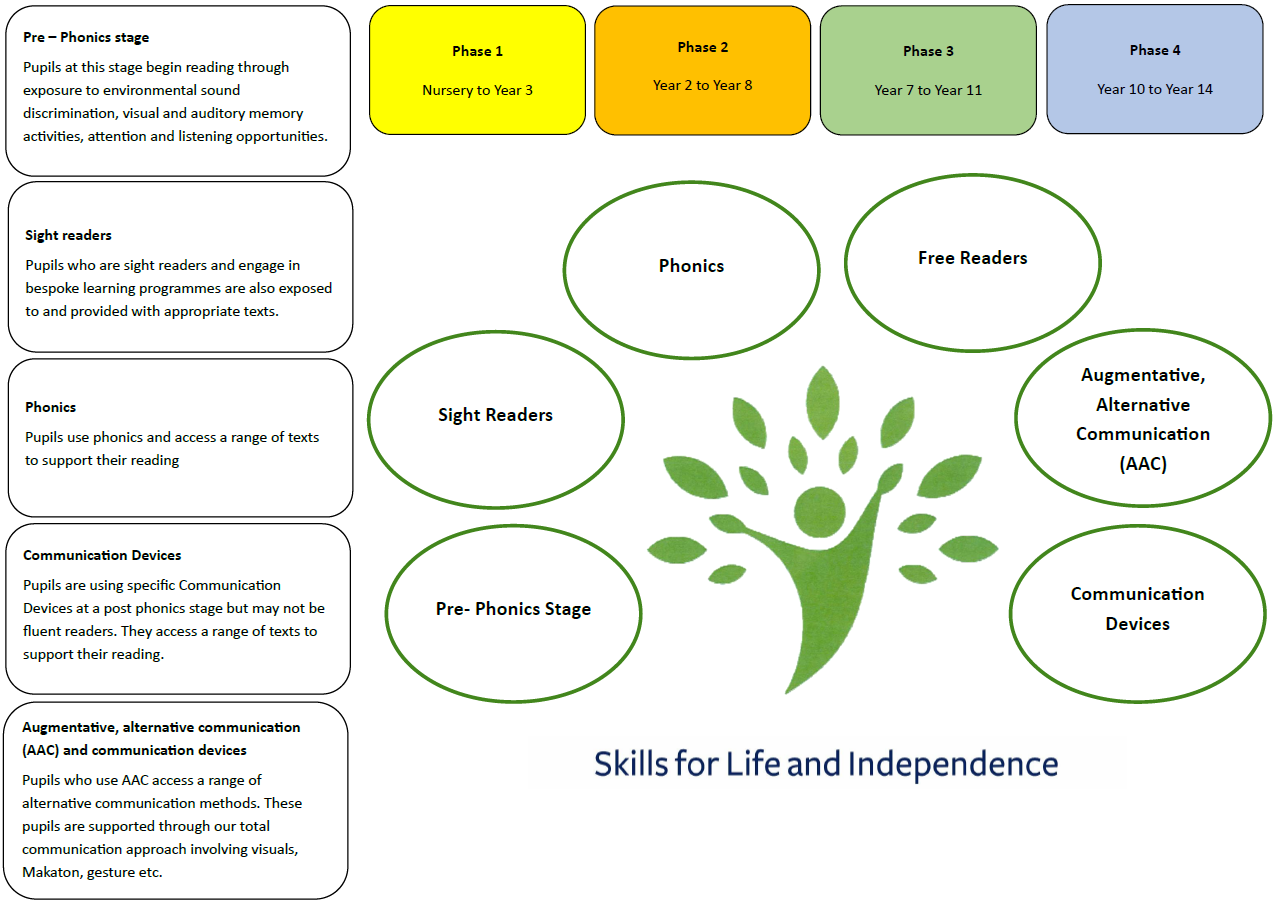
Reading is an essential life skill. Access to reading at Oakley is diverse with a range of experiences to enable pupils to develop their reading skills. Pupils will be taught by building on pre-reading skills. We use Phonics Programme Rocket Phonics and Rising Stars Reading Scheme.


Reading
At Oakley School reading is a core element of the curriculum. We endeavour to create a culture of a love of reading as well as ensuring that all pupils leave us with skills in reading which will help them to navigate their next step. Reading is personalised across the school and approaches are adapted to different pathways and phases. We have chosen a range of high-quality, culturally diverse texts to support the delivery of termly thematic topics. These texts have been handpicked for each Phase and Learning Pathway, to promote breadth and progression in each pupil’s learning journey.
Phonics
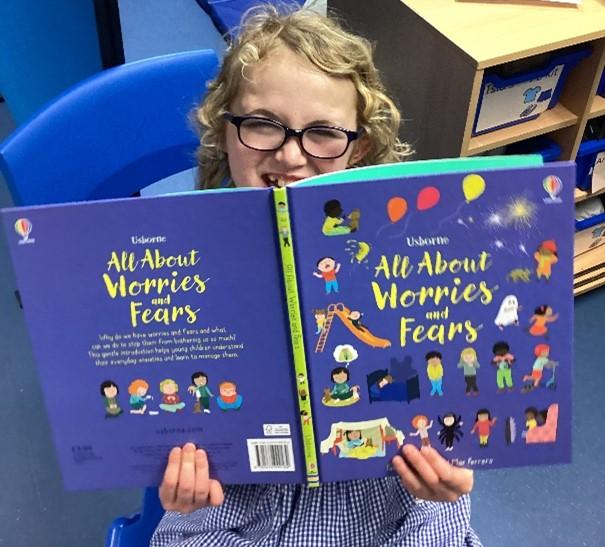
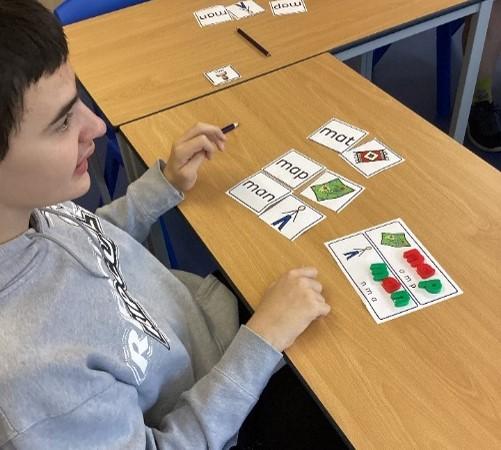
Phonics instruction is implemented throughout the school using the Rising Stars and Rocket Phonics systematic synthetic phonics programs. Each class has access to scheme books that are carefully matched to the pupils' phonics levels. These books are available as hard copies for reading at home, and e-books can be accessed through the Rising Stars website.
Daily phonics sessions are taught consistently, providing frequent opportunities for pupils to practice. A variety of engaging resources, such as magnetic letters, sand writing, and sound buttons, are used to reinforce learning through repeated practice. These tools are designed to captivate pupils' interest and support their phonics development effectively.
Pre-Phonics
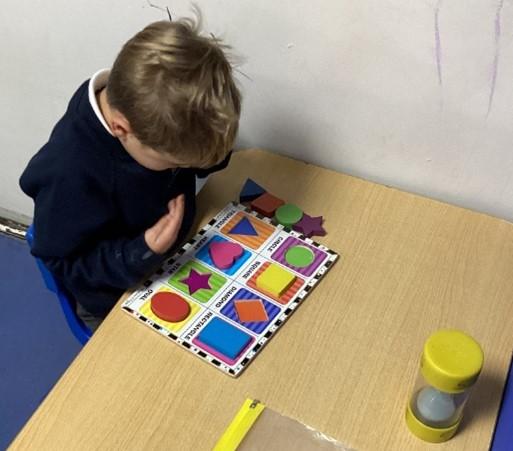
Many of our pupils are focused on developing foundational pre-phonics skills, which are crucial before beginning the formal phonics program. These skills are primarily taught within the Engage pathway, with a strong emphasis on sound discrimination, sound exploration, and matching shapes and symbols. This learning is facilitated through engaging activities such as rhymes, games, and the use of tactile resources.
The Gestalt Approach
For some pupils at Oakley who require an alternative approach to phonics for learning to read, we use the Gestalt approach, which focuses on helping pupils see words, sentences, and texts as meaningful wholes rather than just individual letters or sounds. Instead of breaking reading down into separate skills, the Gestalt approach encourages understanding the overall context and making connections between words, ideas, and experiences. It promotes active engagement, encouraging pupils to use their prior knowledge and personal insights to make sense of what they read, making reading more intuitive and meaningful.
Futures and Destinations
As our pupils approach adulthood, we place a greater emphasis on functional literacy to prepare them for their next steps. This includes developing their ability to read signs and labels, understand community signs like "Exit," "Stop," or "No Entry," and interpret labels on products, food packaging, and clothing (e.g., expiry dates, washing instructions). They also focus on understanding timetables and schedules, reading menus, following directions, managing personal correspondence, filling out forms, and interpreting receipts, bills, and safety instructions. Where applicable, pupils work on CV writing, composing professional letters, and addressing envelopes.
At this stage, some of our young people will apply these skills to sit functional skills exams, earning qualifications that will support their future endeavours.
Additionally, we encourage reading for pleasure and as a leisure activity, including listening to audiobooks and podcasts, to foster a lifelong love of literature.
How to promote reading skills at home
We are dedicated to fostering a love for reading as a lifelong pursuit for our pupils. This journey begins by creating opportunities for them to engage with and enjoy texts beyond the classroom.
Our school library offers a diverse selection of high-quality books that pupils can borrow to enjoy at home. We encourage you to visit your local library or shops with your child, giving them the chance to choose books and materials that align with their interests, such as comics, magazines, or topics they enjoy. Allowing your child to pick out books fosters a sense of ownership over their reading.
Establishing a regular reading time each day builds consistency; start with short, manageable sessions and gradually increase the time as they become more confident. You could also include a bedtime story in their nighttime routine, encouraging reading as a relaxation tool and providing you both with something to enjoy together.
A successful reading session can look different for every child. Some may be deeply immersed in a book on their own, while others may appear to be only nearby as an adult reads aloud, seemingly not actively listening. Both scenarios are valuable and contribute significantly to a child’s reading development, and parental involvement is key to enhancing this experience.
Surround your home with reading materials such as books, magazines, newspapers, and even posters or labels. Keeping books easily accessible in various rooms encourages spontaneous reading. Finally, use everyday opportunities to promote reading outside of books by having your child read recipes, signs, menus, or shopping lists. Integrate reading into daily activities, like reading instructions for games or following directions for crafts.
If you are unsure of the best way to share a reading experience with your child, please reach out to their class teacher for guidance.