
Oakley School
Universal Offer
At Oakley, we are committed to embedding trauma-informed, neuro-affirming practice across our school and ensure it permeates through every aspect of school life. All pupils at Oakley School receive a differentiated curriculum tailored to their individual needs and EHCP outcomes and targets. This is delivered through our Universal Offer, which every family can expect their child(ren) to receive.
Some pupils may also require targeted or specialist support, including interventions and therapies such as: Occupational Therapy (OT), Speech and Language Therapy (SALT), Physiotherapy, Music Therapy, Play Therapy and Counselling.
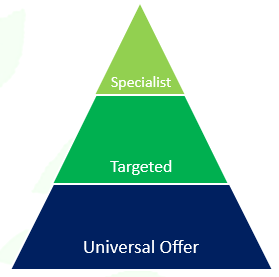
A specialist learning environment, designed to meet the needs of all pupils, is central to our universal offer
- Small class sizes (approx. 10 pupils)
- Highly skilled staff trained in SEND
- A Creative Curriculum tailored to individual needs
- Access to specialist facilities:
Life Skills Rooms, Sensory Integration Rooms, Soft play,
Multi-Use Games Area (MUGA), Magic Carpet,
Forest School and Playground spaces in each phase.
|
Sensory Integration & Motor Skills We develop fine/gross motor and coordination skills using:
|
Skills for Life & Independence We achieve this by developing:
|
|
Sensory-based strategies: We offer:
|
Social, Emotional & Mental Health We support emotional regulation and wellbeing through our:
|
Total Communication Approach
We recognise that communication is central to learning and well-being and validate all forms of communication styles by using a Total Communication approach.
This includes:
- Ensuring all pupils have a functional means to communicate that is individualised to them
- Acknowledging all forms of communication
- Embedding multiple communication modalities across the school – Makaton, speech, gestures, symbols, objects, written/pictorial, AAC
- Ensuring staff have frequent training in different communication modalities including Makaton, use of visuals and AAC, Gestalt Language Processing.
- Recognising echolalia as a form of communication
- Giving students time and space to communicate in their chosen modality – using Intensive Interaction and OWL (Observe, Wait and Listen)